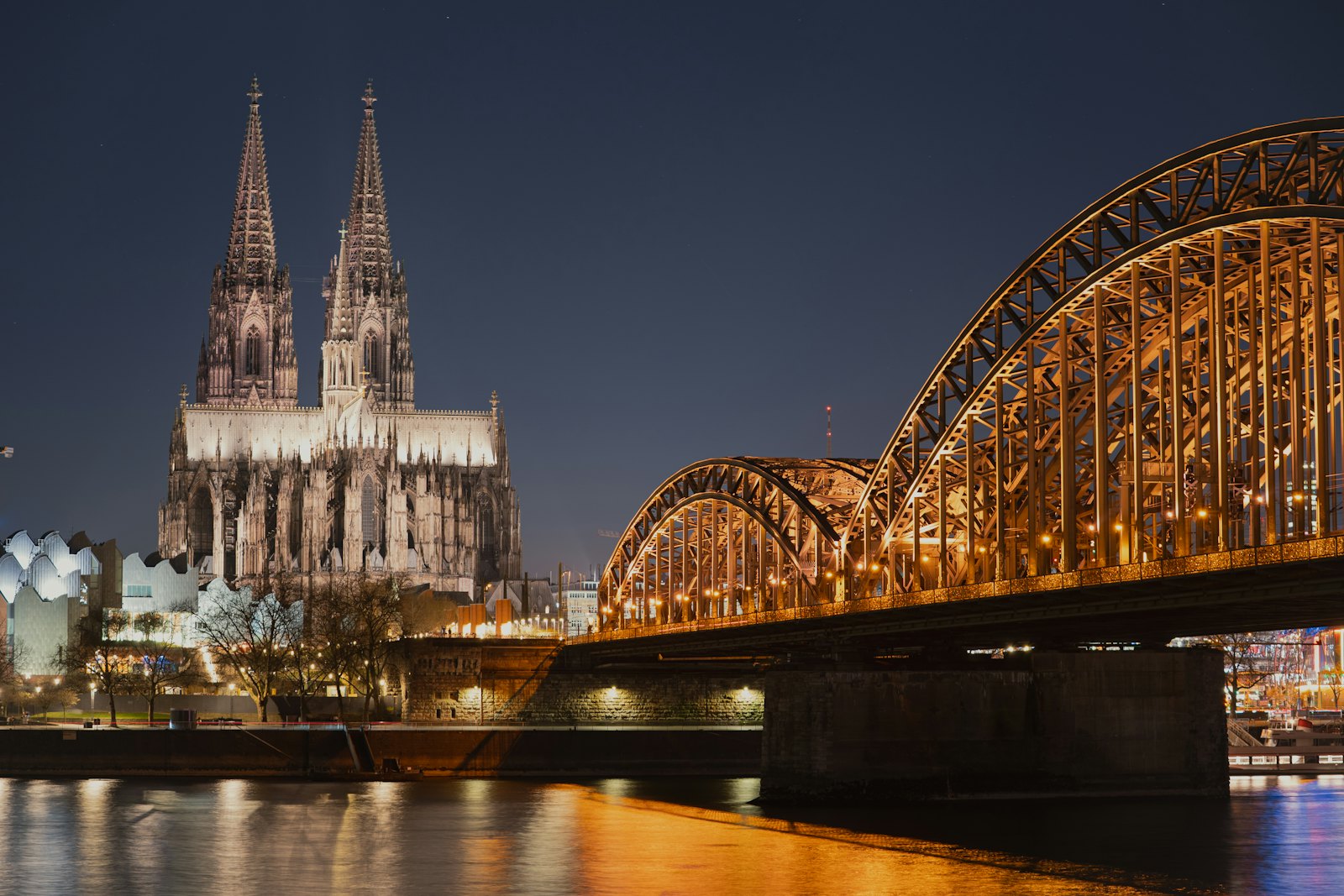
Cologne nightlife by neighbourhood: where to go out, from Kölsch in the Altstadt and cocktails in the Belgisches Viertel to Ehrenfeld's clubs and Bootshaus.
Cologne nightlife is spread across six areas, and each one does a different job. The Altstadt has the Kölsch brewery taverns by the cathedral. The Belgisches Viertel has cocktail bars and a techno vault under Köln West station. Ehrenfeld has most of the clubs, in old factories and under the railway arches. The Kwartier Latäng is the student quarter, with hip-hop, indie and a weekend afterhour. The Südstadt has indie by Chlodwigplatz, and across the Rhine, Mülheim has Bootshaus, the city's biggest club.
Choose the area by the night you want, then plan the way home: the trams run all night at the weekend, and much of the centre is walkable. This guide covers what each area is like, where to go and who it suits.
The Belgisches Viertel, the Belgian Quarter, lies west of the centre between Venloer Straße and Aachener Straße. Its streets were named in 1884 after Belgian and Dutch places, Brüsseler Platz is its heart, and on summer evenings hundreds of people gather on the square, which is why the bars around it work to restricted hours. This is the stylish end of a Cologne night: small bars, cafés and shops, and a crowd that dresses up a little more than elsewhere.
For a serious drink, Little Link on Maastrichter Straße is Stephan Hinz's cocktail bar, with house-made ingredients such as porcini mushroom whiskey. It opens at 17:00, or 14:00 on Friday and Saturday, and takes bookings only for times before 19:30. For a louder one, Sixpack on Aachener Straße has been a party bar since 1987, with DJs, cocktails and Kölsch from Wednesday to Saturday from 20:00. When you want to dance, walk a few minutes north to Gewölbe, a techno club in a brick vault under Köln West station, open on Friday and Saturday from 23:00 to 06:00 at €12–20.
The Belgian Quarter suits a first drink, a date, and anyone who wants cocktails before a club. It does not suit people looking for cheap rounds or a big dance floor.
Ehrenfeld is the answer if you are asking where to go out in Cologne for clubs. The district west of the centre grew up around factories, and many of its venues sit in the old halls or under the railway arches by Köln-Ehrenfeld station. Most are within a few hundred metres of the Venloer Str./Gürtel stop on tram lines 3, 4 and 13.
Club Bahnhof Ehrenfeld runs concerts and parties on two floors under the arches, with the YUCA room for new artists. Helios37, in a hall of the old Helios AG works, and the Live Music Hall, a machine factory until 1990, both switch from gigs to club nights at 23:00. Artheater on the Ehrenfeldgürtel has mixed concerts, comedy and techno, trance and house nights since 1998, some of them running until 07:00. On the Nippes side, Odonien holds club nights among Odo Rumpf's scrap-metal sculptures in an old railway yard. For a free night, Bumann & Sohn runs a club bar with DJs on Friday and Saturday until 05:00, and a beer garden in good weather.
Ehrenfeld suits techno and house fans, gig-goers and anyone who wants several venues within walking distance. Not for you if you want polished interiors: this is industrial, and the programme changes every night, so check if your ticket is for a concert or a party.
The Kwartier Latäng, Cologne's Latin Quarter, is the student district around Zülpicher Straße and Luxemburger Straße, south-west of the centre. The streets around Zülpicher Platz are full of budget pubs, and on Luxemburger Straße three late venues sit within a few hundred metres of the Barbarossaplatz stop on tram lines 12, 15, 16 and 18.
Veedel Club was the Rose Club in the 1980s, and a then-unknown Nirvana played there in 1989. Today it runs hip-hop, R&B and 2000s nights from 23:00, some of them free or under €10. Across the street, Blue Shell has been a meeting point for musicians and writers since 1979, with concerts, DJ parties and poetry slams in a room for about 250 people. Further along, Red Cat Lounge opens when everyone else closes: techno afterhours every Saturday from 06:00 to 15:00 and every Sunday from 06:00 to 18:00.
The Kwartier Latäng suits students, small budgets and people who want indie or hip-hop rather than techno. It is packed on carnival days: on Weiberfastnacht the Zülpicher Platz tram stop is not served from 09:00.
The Altstadt, from the cathedral down to the Rhine, is where Kölsch culture lives. The beer comes in 0.2-litre glasses called Stangen, carried by a waiter called the Köbes, who brings a new one as soon as yours is empty until you put a beer mat on top. Only beer brewed in and around Cologne may be sold as Kölsch, under the Kölsch Convention signed in 1986.
Früh am Dom, by the cathedral since 1904, has a medieval vaulted cellar and a beer garden by the Heinzelmännchen fountain, and stays open until midnight on Friday and Saturday. Brauerei zur Malzmühle on the Heumarkt has brewed Mühlen Kölsch since 1858 and closes at 01:00 at the weekend; Bill Clinton stopped by during the 1999 G8 summit. On Friesenstraße, at the north edge of the old town, Päffgen has brewed since 1883 and serves its Kölsch only from the cask. For a gig, GLORIA, a former cinema near Neumarkt, hosts concerts, comedy and carnival parties.
The Altstadt suits a first evening, groups and beer lovers. It is touristy around the cathedral, and the brewery taverns close between 23:00 and 01:00, so move on for the late part of the night. The Heumarkt and Schaafenstraße, near Rudolfplatz, are the centres of Cologne's gay nightlife.
The Südstadt runs south of the old town towards Chlodwigplatz and the Severinskirche. It is residential and less touristy than the centre, and its nightlife is small but loyal.
Start early at Brauhaus Johann Schäfer on Elsaßstraße, a modern brewhouse with its own Pils, Helles and wheat beer plus Gaffel Kölsch; it closes at 22:00. Then walk to Tsunami Club on Im Ferkulum, near the Severinskirche, for indie, post-punk, Britpop and 80s parties on Friday and Saturday from 23:00 to 05:00, with entry from €6. Trams 15 and 16 stop at Chlodwigplatz, about 180 metres from the club.
The Südstadt suits indie fans and anyone who prefers a local crowd. Not for you if you want choice: there are far fewer late venues here than in Ehrenfeld.
The right bank of the Rhine is quieter after dark, with one big exception. Bootshaus sits on Auenweg by the Mülheim harbour, under a Rhine bridge, and it was Germany's highest-placed club in DJ Mag's Top 100 Clubs 2026, at number 11. Four floors mix EDM and harder techno, entry is 18+ with official photo ID, and headline nights sell out online.
Getting there takes planning: take tram 1, 3, 4 or 9 or a train to Köln Messe/Deutz, then walk about 1.7 km, or ride bus 150 to Thermalbad. Before you go, have a Kölsch at Lommerzheim on Siegesstraße in Deutz, an old-school pub that pours Päffgen Kölsch with Halve Hahn, a rye roll with aged Gouda. It is closed on Tuesdays.
Deutz and Mülheim suit people who came for one big night. Not for you if you want to hop between clubs: Bootshaus is a destination, not a stop on a crawl.
Cologne's Stadtbahn trams do the work at night. On the nights before Saturday, Sunday and public holidays they run all night, about every 30 minutes and on some lines every 15. From Monday to Thursday most lines stop around 01:00, and night buses run hourly at the weekend. A single ticket within the city costs €4.00, a short hop €2.90 and a 24-hour ticket €9.60. The Belgian Quarter, the Altstadt and the Kwartier Latäng are walkable from one another; Ehrenfeld and Deutz need a tram. During carnival, above all from Weiberfastnacht on 4 February 2027, expect extra trams and closed stops in the centre.
For nightlife, stay around the Ring between the Belgian Quarter and the Kwartier Latäng: you can walk to the cocktail bars, the student pubs and the Altstadt, and Ehrenfeld is a short tram ride away. Ehrenfeld itself is the best base if you plan to spend every night in its clubs. Deutz is handy for Bootshaus and the trade fair, but quieter at night. Compare hotels and hostels by area on our page of places to stay in Cologne.
Cologne works best when you start with Kölsch in the old town and finish in Ehrenfeld or across the river. For closing times, prices and the carnival dates in one place, read the full Cologne nightlife guide. If you are choosing a club, start with our ranked list of the 10 best clubs in Cologne. Travelling on through Germany? See our nightlife guides to Berlin, Hamburg and Munich.
Ehrenfeld for clubs, the Belgisches Viertel for cocktail bars, the Altstadt for Kölsch in brewery taverns and the Kwartier Latäng for cheap student nights. Many people start in the Altstadt and end in Ehrenfeld.
In the Kwartier Latäng, around Zülpicher Straße and Luxemburger Straße: budget pubs, Veedel Club for hip-hop and Blue Shell for indie and punk.
Between the Belgian Quarter, the Altstadt and the Kwartier Latäng, yes. Ehrenfeld and Deutz need a tram, and Bootshaus is about 1.7 km from Köln Messe/Deutz station.
Around the Heumarkt in the Altstadt and Schaafenstraße near Rudolfplatz. Artheater and other clubs also host queer nights.
Everywhere is busy, and the Kwartier Latäng and the Altstadt get so crowded that trams skip or close stops there. Club Bahnhof Ehrenfeld hosts Kölsch band shows, and Bumann & Sohn parties for six days from Weiberfastnacht.