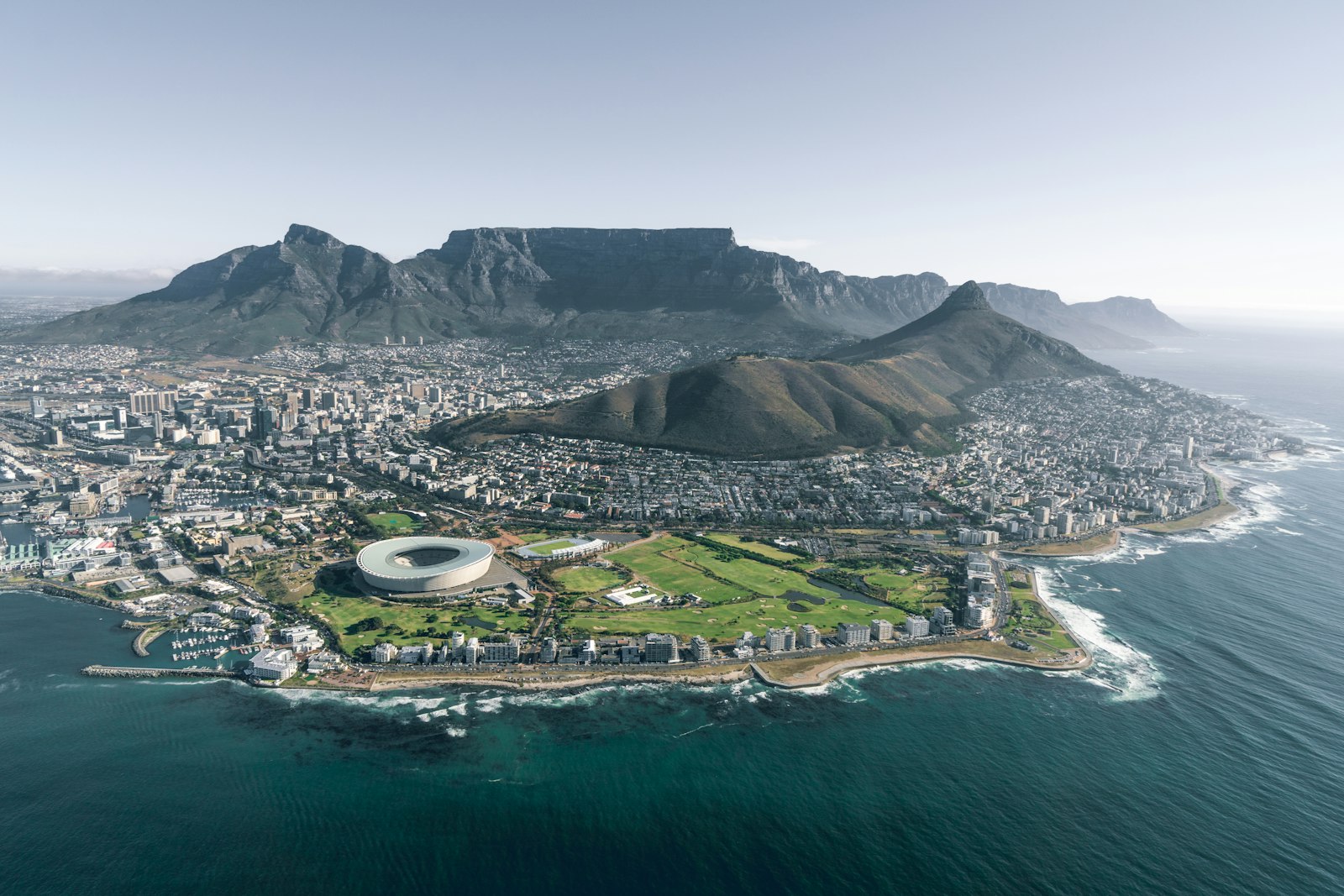
Cape Town has Long Street and the beach bars; Johannesburg has kwaito, Afro house and amapiano. Plan every night around a ride-hailing car, door to door.
Where to go out
Nightlife in South Africa runs on music and rides. Kwaito, Afro house, gqom and amapiano all grew out of its cities. Crime is a real risk after dark, so you travel door to door by Uber or Bolt and do not walk between venues. Hours are set by each licence: bars commonly close around 02:00 and clubs run later.
Each city has its own night. Cape Town nightlife is Long Street's bars, the Camps Bay beachfront and student pubs in Observatory. Johannesburg has Maboneng, Melville, Braamfontein and Newtown, and the strongest house and amapiano scene. Durban has Florida Road and the home of gqom.
Plan the ride before the drink. Visitors get transport wrong. Minibus taxis and night trains are not advised, and Cape Town's MyCiTi buses stop around 22:00. Order the car from inside the venue and ask the door staff to wait with you.
Johannesburg is the centre of the scene. Resident Advisor lists Carfax and And Club among its clubs.
Durban is where gqom began, in the early 2010s.
Camps Bay has beachfront bars and clubs in Cape Town's summer.
Long Street puts bars and clubs next to several youth hostels, and a beer costs about R35 to R50.
The Cape Town International Jazz Festival fills two days at the convention centre.
Cape Town Pride marches from De Waterkant in early March, and Johannesburg has queer nights such as Vogue Nights.
Not for you if you want to walk home. Crime is a real risk after dark, and the only late transport you can rely on is a ride-hailing car.
Events from the end of February, ending in a parade on a Saturday in early March, from De Waterkant to Green Point.
Two days at the Cape Town International Convention Centre. The 2026 edition ran 27 and 28 March.
A week-long desert arts event for about 11,000 people, 27 April to 3 May in 2026, several hours' drive inland. Nothing is for sale, so it is not a club festival.
A horse race at Greyville Racecourse on the first Saturday of July, with a day of fashion and parties around it. The 2026 race was on 4 July.
Friday on Long Street, where bars and clubs sit door to door. Saturday in Camps Bay for sunset cocktails, then a car back into town.
Friday in Melville, where 7th Street's bars fill with students. Saturday at a Newtown club such as Carfax. Sunday afternoon in Maboneng, in daylight. Go by car every time.
Two nights in each, joined by a flight of about two hours. House and amapiano first, then Long Street and the beach.
Three nights in Johannesburg, two in Durban for Florida Road and gqom, two in Cape Town. Flights between them take about one to two hours.
Victorian balconies above bars, clubs and hostels in central Cape Town. Take a car in and out.
Beachfront cocktail bars facing the Atlantic. Book the ride home before you sit down.
Cafes and bars west of Johannesburg's centre, popular with University of Johannesburg students.
Promoters use spaces such as Constitution Hill and Victoria Yards for one-off parties. Check Resident Advisor for dates.
The city's main going-out street, with bars, restaurants and cafes. Avoid the city centre after dark.
A redeveloped inner-city precinct east of the centre. Arrive and leave by car and stay inside the precinct after dark.
A large roll stuffed with chips and steak, polony or calamari, made to share. It began in Athlone, Cape Town, in 1976.
A hollowed loaf filled with curry, sold as a quarter, half or full loaf. It comes from Durban's Indian community.
Gauteng's township answer: a quarter loaf packed with chips, polony and cheese, also called a spatlo.
A grilled spiced sausage in a soft roll, sold at street stands and after events.
Zulu for "burn the meat": you choose raw meat from a butcher and grill it on site, often with house music on.
The purchase age is 18, and some nights are 21+. Bring a passport or photocard licence.
Beachfront venues lean smart-casual. Long Street, Maboneng and Melville are casual.
Round up in bars and leave about 10% in restaurants. Give car guards, the informal parking attendants, a few rand.
Card skimming and confidence scams are widespread. Cover your PIN and avoid cash machines at night.
Adults may use cannabis in private, but buying, selling and public use stay illegal. Other drugs are illegal, penalties are severe and foreigners can be expelled. Drink spiking involving robbery is reported, so keep your drink in sight.
Muggings are common. Use your phone inside, and ask before filming anyone.
Even a few blocks can be risky in the dark. Order a car instead.
| Club entry | about R100–250 (€5–14) |
| Beer, 500 ml in a pub | about R35–50 (€1.90–2.70) |
| Cocktail in a club | from about R95 (€5) |
| Local transport ticket (daytime only) | about R25–35 (€1.40–1.90) |
| Ride-hail or taxi, 8 km | about R140–220 (€8–12) |
| Late-night takeaway (Gatsby, kota) | about R70–150 (€4–8) |
Four beers, a free-entry bar, a takeaway and one ride.
Entry, three cocktails and two beers, food, rides both ways.
Entry, six cocktails, rides both ways and food. A table costs far more.
Uber and Bolt are widely available in Cape Town and Johannesburg. In Durban, registered taxis must be called. Minibus taxis are not advised. Do not walk to or from Gautrain stations after dark.
The South Africa drinking age for buying alcohol is 18. Carry a passport or photocard licence. Some club nights are 21+.
Cards are widely accepted in cities. Cover your PIN and avoid cash machines at night. Bring a little cash for tips and car guards.
Club and festival tickets sell through Quicket and Computicket. Resident Advisor lists the bigger nights.
Banned in most public places under municipal by-laws. Drink on licensed premises.
The UK government reports a high crime rate and advises against walking after dark. The police number is 10111, and 112 works from mobiles. Do not drive after drinking: the limit is 0.05 g per 100 ml of blood.
Banned in most indoor places except separated, ventilated areas. Fines reach R50,000, and a pending bill would end indoor smoking areas.
English works in every venue. Zulu, Xhosa and Afrikaans are widely spoken. Howzit means hello and lekker means good.
Yes, for music and bars, if you plan the rides. Johannesburg has the house and amapiano clubs, Cape Town the bars and beach.
Each licence sets its own hours. Bars commonly close around 02:00 and clubs with late licences run on, some into the morning.
About €25 for a cheap night, €55 for a normal one and €90 or more for a big one. Entry is about R100 to R250.
18 for buying alcohol. Bring photo ID, because some nights are 21+.
Johannesburg for clubs, Cape Town for bars and Camps Bay, Durban for gqom. Cape Town nightlife is the easiest start for visitors.
It can be, with planning, but the risk is real. The UK government reports a high crime rate, so take ride-hailing door to door, stay in busy venues and keep phone and cards covered.