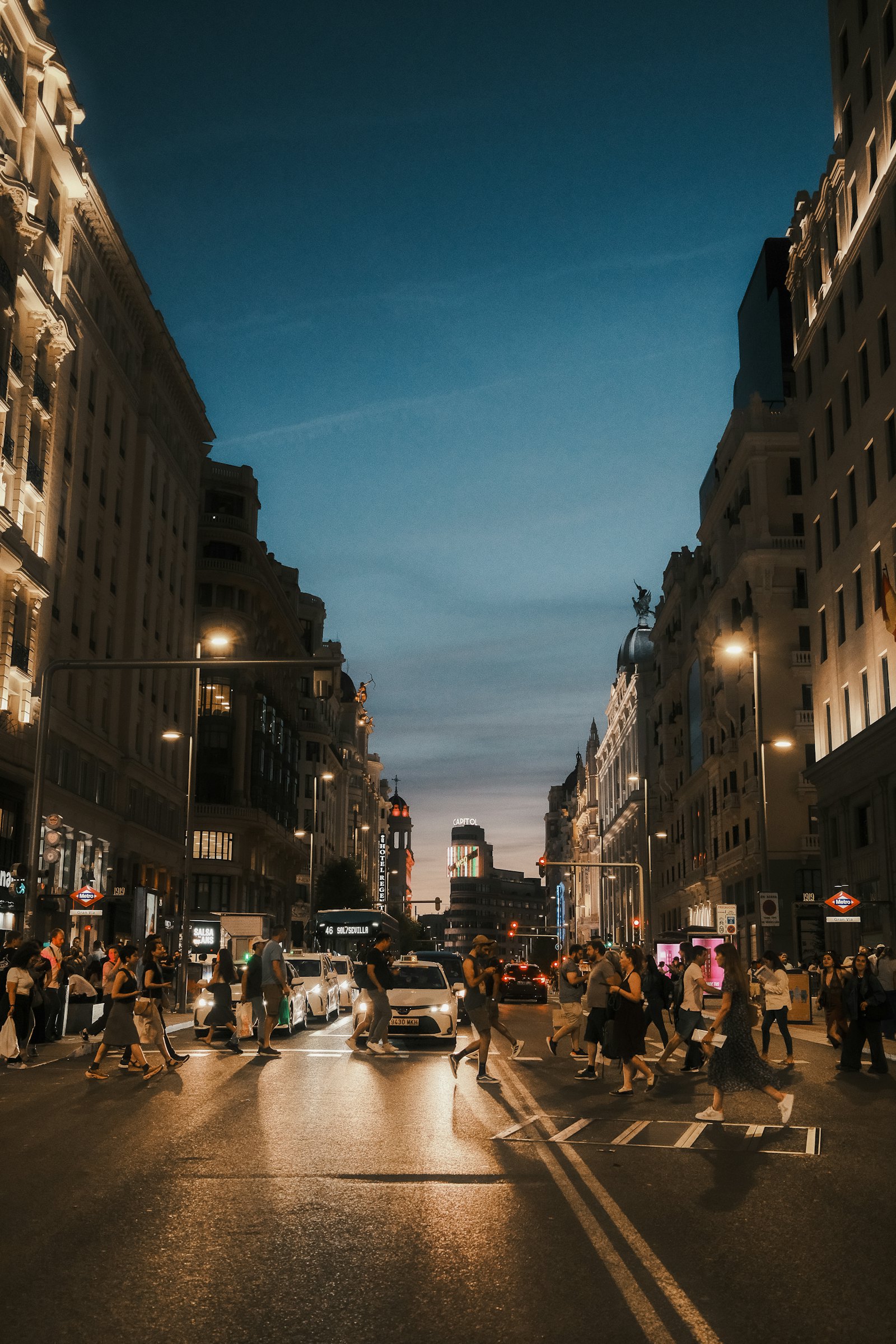
Madrid nightlife by neighbourhood: which area suits your night, from Malasaña rock bars and Chueca cocktails to Lavapiés house clubs and Chamartín techno.
Madrid nightlife is spread across seven areas, and each one does a different night. Malasaña and Chueca are for bars and the clubs on Calle de Barceló. Sol and Gran Vía have the central clubs and the classic cocktail bars. Huertas runs from jazz to Teatro Kapital at the bottom of Calle de Atocha. La Latina and Lavapiés start with tapas and end with house music or a show. The serious techno has moved north to Chamberí and Chamartín, and the biggest raves sit outside the city.
Choose the area by the night you want, then check how you get home: the metro stops at 01:30 and the búho night buses all run through Plaza de Cibeles. This guide covers what each area is like, where to go and who it suits.
This is the middle of everything, and the easiest place to finish a night: Plaza de Cibeles, where every búho night bus starts or ends, is a short walk east along Calle de Alcalá. Start high. The Azotea del Círculo is the roof of the Círculo de Bellas Artes, 56 metres above Calle de Alcalá, with €6 entry and a 02:00 close at the weekend. Go for sunset and one drink. Then walk down to Museo Chicote at Gran Vía 12, which has served cocktails since 1931 and stays open until 03:30 on Friday and Saturday.
For dancing, Lula Club at Gran Vía 54 holds 1,200 people in a room styled after Studio 54 and plays house and tech house until 06:00, with tickets from €15 to €35. On a side street between Gran Vía and Sol, Sala El Sol has been open since 1979: bands early, then club nights from 00:30 on Thursday, Friday and Saturday. Gran Vía, Callao and Sol metro stations are all a few minutes away. The area suits a first night in Madrid and anyone who wants to walk home. It does not suit anyone looking for a neighbourhood crowd.
Malasaña is where Madrid's 1980s Movida grew up, and it still has the bars to show for it. La Vía Láctea on Calle de Velarde opened in 1979 in a former coal yard and carries a plaque from the city council; it plays rock and indie until 03:30 at the weekend. For a better drink, 1862 Dry Bar on Calle del Pez mixes classic cocktails from original recipes and takes reservations, which helps on a Saturday.
The club here is Siroco on Calle de San Dimas, open since 1989, with concerts from 21:00 and club nights until 06:00 on Friday and Saturday across two rooms. Tribunal, Bilbao and Noviciado are the metro stations; after 01:30, walk down to Gran Vía and on to Cibeles for a búho. Malasaña suits a younger, indie-leaning crowd and anyone who prefers ten bars to one club. Not for you if you want a dressed-up night.
Chueca is the centre of LGBTQ+ Madrid. The city's tourism office lists drag show bars on Calle de Pelayo, and the cocktail bars run along Calle de la Reina, on the Gran Vía edge of the neighbourhood. Bar Cock at number 16 has been there since 1921 and stays open until 03:30 on Friday and Saturday.
The clubs are on Calle de Barceló, at the Tribunal end. Teatro Barceló is a 1930 theatre that became a disco in 1980 and now opens five nights a week; Friday and Saturday are 25+. In the same building, Sala But hosts Mondo, the techno and electro night, from midnight to 06:00. Chueca (L5), Tribunal (L1, L10) and Alonso Martínez (L4, L5, L10) are the stations. It suits mixed groups, LGBTQ+ visitors and anyone who wants a cocktail bar and a club within five minutes of each other.
The grid of streets between Sol and Atocha, around Calle de las Huertas and Calle de Echegaray, is packed with bars. Salmón Gurú on Calle de Echegaray is Diego Cabrera's bar, number 23 in The World's 50 Best Bars 2024; it takes no reservations, so come early. Café Central, Madrid's best-known jazz club, moved in April 2026 to the Ateneo building on Calle de Santa Catalina and still plays at 20:00 and 22:00 every night.
At the bottom of Calle de Atocha, near Estación del Arte metro, Teatro Kapital fills a converted theatre with seven floors: two dance floors, a cocktail bar, a reggaeton room and karaoke, open until 06:00 at the weekend. Antón Martín (L1) and Sevilla (L2) serve the top of the area. It suits a night that starts with music and dinner and ends in a big room. Not for you if you want a small club with a known DJ.
La Latina is where Madrid goes for tapas, along Cava Baja and the streets around it, and Lavapiés next door is the most multicultural part of the centre. The night here starts at the bar and moves on. Medias Puri on Plaza de Tirso de Molina hides three rooms of live performers, reggaeton and karaoke behind a haberdashery-style front, open on Friday and Saturday until 06:00.
For music, Sala Villanos on Calle de Bernardino Obregón, near Embajadores, books house and disco selectors such as Motor City Drum Ensemble and Crazy P, with tickets around €23. At the other end, Shôko on Calle de Toledo runs two floors of reggaeton, Spanish urban and commercial nights. Tirso de Molina (L1), La Latina (L5) and Embajadores (L3) are the stations. It suits people who eat late and dance later. Not for you if you want a quiet bar after midnight.
The north of the city is residential, with few bars, but it holds two of Madrid's most serious electronic rooms. LAB theCLUB sits on the top floor of Chamartín station and hosts the biggest international bookings in Madrid, from Adam Beyer to Reinier Zonneveld, with tickets around €20 and nights until 06:00. Chamartín metro (L1, L10) and the Cercanías trains stop in the same building.
The Bassement on Calle de Galileo in Chamberí is the opposite: a small basement with hard techno from the Laster Club parties, Surgeon among the bookings, and a no-phones rule on techno nights. Quevedo (L2) and San Bernardo (L2, L4) are the nearest stations. Both suit people who travel for a line-up. Neither suits a bar crawl: there is little to do nearby, and the trip home after 06:00 is a búho or a taxi.
Some of the biggest nights in the region happen well outside the centre. Fabrik in Humanes de Madrid holds more than 4,000 people across a main room, Área 19 and a terrace, and was named best large club in the Iberian Peninsula in 2025. Saturday events open between 18:00 and 22:00 and close at 06:00, and an event shuttle runs from Templo de Debod in the centre and from Fuenlabrada station.
Inside the city limits but far from Sol, The Garage on Calle Isla de Java in the north hosts long sessions such as Innervisions and a Dennis Cruz all-day set this October, and Lasociaciøn on Calle Gamonal in the south-east runs techno parties through the autumn. These are destination nights for people who plan around one booking. They are not for a first visit, or for anyone who wants to get home without checking a timetable.
For nightlife, stay between Sol, Malasaña and Huertas. You can walk to most of the bars and clubs in this guide, and Plaza de Cibeles, where every búho starts or ends, is within reach on foot. Malasaña and Chueca are louder at night but closer to Calle de Barceló; Huertas puts you between the jazz and Teatro Kapital. If you are only coming for LAB theCLUB, a room near Chamartín saves a long ride home. Compare hotels and hostels by area on our page of places to stay in Madrid.
Madrid works best when you pick one area per night and plan the ride home before the 01:30 last metro. For closing times, prices and night bus details in one place, read the full Madrid nightlife guide. If you are choosing a club, start with our ranked list of the 10 best clubs in Madrid.
Malasaña and Chueca for bars, with Teatro Barceló and Mondo on Calle de Barceló for clubs. For techno, go north to LAB theCLUB at Chamartín.
Yes. It is the centre of LGBTQ+ Madrid, with cocktail bars on Calle de la Reina, drag shows on Calle de Pelayo and clubs on Calle de Barceló, all within a few minutes' walk.
Chamberí and Chamartín: LAB theCLUB is on the top floor of Chamartín station and The Bassement is on Calle de Galileo. Mondo at Sala But is the central option.
The metro stops at 01:30. After that, take one of the 27 búho night buses from Plaza de Cibeles, every 15–20 minutes on Saturday night, or a taxi.
The main risk is pickpocketing on the metro and in busy bars. Keep your phone off the table and do not fall asleep on the last train.