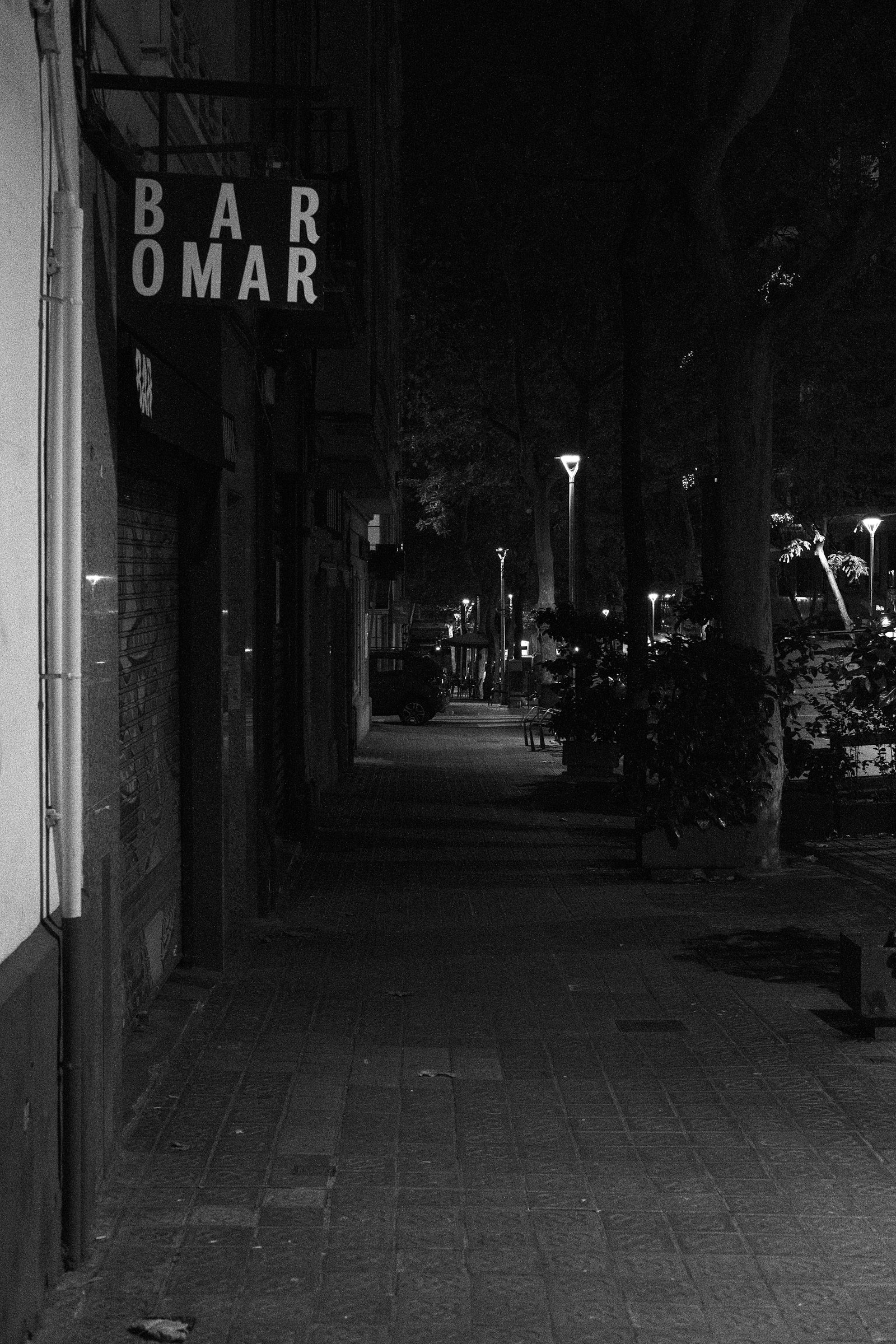
Barcelona nightlife by neighbourhood: which area suits your night, from Port Olímpic beach clubs to Raval basements and Gràcia squares, and how to get home.
Barcelona nightlife is spread across seven neighbourhoods, and each one does a different night. The beach clubs sit on the Port Olímpic seafront, the biggest club is in the old factory district of Poblenou, the best techno is in Poble-sec and up on Montjuïc, and the cocktail bars fill the old town. Gràcia has no big clubs at all, just squares and bars.
Pick your area by the night you want, not by the map. This guide walks through each one: what it feels like, where to go, how to get there and back, and who it suits. Clubs close at 05:00 in the week and 06:00 on Friday and Saturday, and the metro runs all night on Saturday.
The Port Olímpic was built for the sailing events of the 1992 Olympics, and its seafront promenade is now Barcelona's beach-club strip: restaurants by day that turn into clubs at midnight. The crowd is mostly visitors, the music is commercial and the doors sell tables.
Opium is the best known, a restaurant with sea views by day and a club every night from 23:30. KU Barcelona, the former Pacha, reopened under its new name in September 2025 and plays hip hop, R&B and reggaeton at weekends. Both are free on a guest list before 01:00 and €15–20 after, and both want smart casual and clean shoes. Shôko and Carpe Diem, further along the same promenade, run the same formula.
Getting there: metro L4 to Ciutadella | Vila Olímpica, then about ten minutes on foot. Getting home: the same line runs all night on Saturday; on other nights take a NitBus or a taxi.
Who it suits: groups on a birthday or a stag or hen weekend, and anyone who wants the sea and a dress-up night. Not for you if the DJ matters.
Poblenou was the city's industrial district, and the nightlife here comes down to one address: Razzmatazz, a five-room club and concert venue that opened in 2000 in the building that had been Sala Zeleste. Wednesday and Thursday bring cheaper club nights at €13–15; Friday and Saturday are RazzClub at €18 online, with indie and hits in the main hall and the Human techno series in the smaller rooms on Saturdays.
It is the easiest club in the city for a mixed group, because nobody has to agree on the music. There is no cloakroom, only lockers at €6.50, and doors are not until 00:30 midweek and 01:00 at weekends, so there is no point arriving early.
Getting there: metro Marina (L1) or Bogatell (L4), about five minutes on foot. Getting home: on Saturday the metro runs all night; on other nights it restarts at 05:00, when the midweek club nights close, or take a NitBus towards Plaça de Catalunya.
Who it suits: first-timers, mixed groups and anyone on a budget. Not for you if you want to wander between bars first: this is a destination, not a neighbourhood crawl.
Poble-sec sits between Avinguda del Paral·lel and the slopes of Montjuïc, and it is the best all-round night in the city. Start on Carrer de Blai, a street of pintxo bars where most bites cost €1–2. Then walk to Sala Apolo, the historic theatre where Nitsa has run techno, house and disco every Friday and Saturday since 1996, or to Laut on Carrer de Vila i Vilà for experimental electronic nights in a small room.
Up the hill, inside the Poble Espanyol, Input is the city's most serious weekend techno room, with a Funktion-One system and 360-degree LED screens. Buy tickets in advance: there is rarely free entry. In summer, the open-air La Terrrazza adds a terrace night on the same hill.
Getting there: metro Paral·lel (L2, L3) for Blai and Apolo, or Espanya (L1, L3) and a 15-minute walk uphill for Input. Getting home: from Apolo it is two minutes back to the metro; from Input, walk down to Espanya or take a taxi.
Who it suits: electronic music fans, and anyone who wants dinner, bars and a club within one walk. Not for you if you want the sea.
The Raval is the old town west of La Rambla: dense, mixed, a little rough at the edges and full of bars that stay open late. Moog, off the bottom of La Rambla, calls itself the city's first techno club and opens every night of the year, with a basement for techno and a lighter floor upstairs. La Paloma, a dance hall from 1907, reopened at the end of 2022 and now runs club nights and concerts.
For drinks, Carrer de Joaquín Costa is lined with late bars; Two Schmucks serves €6–11 cocktails until 02:30 every night. For a view, the 360º terrace on the roof of the Barceló Raval hotel is open until 01:00. Boadas, at the top of La Rambla, has been mixing cocktails since 1933.
Getting there: metro Liceu or Drassanes (L3) for the south of the Raval, Universitat (L1, L2) for Joaquín Costa. Getting home: it is a short walk to Plaça de Catalunya for the NitBus. Keep your phone in a front pocket late at night.
Who it suits: people who like their bars cheap and their clubs small. Not for you if you want polish.
The two halves of the medieval centre sit either side of Via Laietana, and this is where most visitors start the night. In the Gothic Quarter, the streets around Plaça Reial hold three clubs within a few minutes of each other: Jamboree, a jazz basement that becomes a hip hop and Latin club at midnight; Macarena Club, a former flamenco tablao with room for about eighty and a Funktion-One system; and Marula Café, for funk, soul and disco.
El Born is the cocktail half. Paradiso, behind the fridge door of a pastrami bar, was named the world's best bar in 2022; there are no bookings, only a virtual queue you join with a QR code at the door. Dr. Stravinsky, on Carrer dels Mirallers, makes its own infusions and spirits.
Getting there: metro Liceu or Drassanes (L3) for Plaça Reial, Jaume I or Barceloneta (L4) for El Born. Getting home: walk to Plaça de Catalunya for the NitBus, or take the metro on a Saturday.
Who it suits: bar crawlers, couples, and anyone who wants to decide at 02:00 where to go next. Not for you if narrow, crowded streets bother you.
The grid north of Plaça de Catalunya is quieter at night than the old town but holds some of the city's best drinking. Sips on Carrer de Muntaner topped the World's 50 Best Bars in 2023 and opens Tuesday to Saturday until 02:00. La Textil, in a former textile warehouse on Carrer de Casp, pours craft beer from 18 taps. City Hall, in a theatre basement at the Plaça de Catalunya end of Rambla de Catalunya, runs techno, house and urban nights until 06:00 at weekends, with a no-trainers door.
The Eixample is also home to the Gaixample, the city's main LGBTQ+ bar area.
Getting there: metro Catalunya (L1, L3), Passeig de Gràcia (L2, L3, L4) or Universitat (L1, L2). Getting home: almost every NitBus line passes through Plaça de Catalunya, within walking distance of most of the Eixample.
Who it suits: cocktail drinkers, LGBTQ+ nights and anyone staying central. Not for you if you want to wander: the blocks are long and the good bars are spread out.
Gràcia still feels like a small town inside the city. There are no big clubs here: the night happens on the squares and in small bars. Bar Canigó on Carrer de Verdi opens in the morning and stays open until 03:00 on Friday and Saturday. Bobby Gin on Carrer de Francisco Giner built its name on the gin and tonic and is open every night from 19:00.
Getting there: metro Fontana (L3) or Joanic (L4), or FGC Gràcia. Getting home: it is around a 30-minute walk downhill to the Gothic Quarter, or the metro on a Saturday. Most people drink here and then head down to a club.
Who it suits: people staying in Gràcia, and anyone who wants a night of conversation rather than dancing. Not for you if you want to dance.
For clubs, stay near a metro line rather than in one particular area. Poble-sec and the Eixample around Plaça de Catalunya put you within walking distance of Apolo, City Hall and the NitBus hub. For bars, El Born and Gràcia are the most pleasant bases, although the old town is the noisiest part of the city at night. Staying by the Port Olímpic only makes sense if the beach clubs are the plan. Compare hotels and hostels on our Barcelona places to stay page.
For how the whole night works, from door rules to prices, read our Barcelona nightlife guide, and for a ranked list of rooms, see the 10 best clubs in Barcelona.
For clubs, Poble-sec & Montjuïc and Poblenou. For bars, the Gothic Quarter & El Born. For beach clubs, the Port Olímpic.
Poble-sec and the Raval: €1–2 pintxos on Carrer de Blai, cheaper bars, and clubs like Moog from €5.
Most cocktail bars close between 02:00 and 03:00: Paradiso at 03:00 on Friday and Saturday, Two Schmucks at 02:30 every night. After that, it is a club.
Between the Raval, the Gothic Quarter and El Born, yes, in ten to fifteen minutes. Poble-sec is a short walk from the Raval across the Paral·lel. Poblenou, the Port Olímpic and Gràcia need the metro or a taxi.
On the seafront promenade at the Port Olímpic: Opium, KU, Shôko and Carpe Diem. Metro L4 to Ciutadella | Vila Olímpica, then about ten minutes on foot.